
Shift Notes: When a Department is Eating Its Young
Workplace Bullying, New Phlebotomists, and the Culture We're Responsible For

Shift Notes is a column written for the people running the floor — supervisors, leads, preceptors, and anyone responsible for a working phlebotomy team. We’ll discuss what’s actually happening in your department and what you can do about it.
Before we get into this week’s Shift Notes, I have an announcement!
If you’re in the Virginia Beach area — or close enough to make the drive — I’d love to see you at the ASCP Virginia Chapter Phlebotomy Seminar on Tuesday, June 23rd at the Advanced Technology Center in Virginia Beach. The event runs from 7:30 AM to noon, and registration is just $30 for ASCP members and $35 for non-members. Students get in free with a valid college ID.
I’ll be presenting on preanalytical considerations and specimen integrity, along with pediatric blood collection techniques. Joining me is Lisa Ballou, MS, MLS(ASCP)DLM, Laboratory Director at Riverside Doctors’ Hospital in Williamsburg. Lisa brings over 35 years of experience in laboratory medicine — including performing and managing phlebotomy teams across outpatient, inpatient, psychiatric, and forensic settings — and she’ll be covering patient satisfaction and communication skills in phlebotomy. It’s going to be a great morning with some topics that don’t always get the attention they deserve.
The venue is at 1800 College Crescent, Virginia Beach, VA 23453. Use this link to register today.
Hope to see some of my readers there!
Okay, back to our topic for today…
I’ve mentioned before that I frequently lurk in the r/phlebotomy community on Reddit. It’s a good place to hear about the experiences of phlebotomists and see what’s going on in the phleb world. Unfortunately, one common theme I tend to see is… bullying.
Recently, someone posted about an experience of being bullied. She was new to the medical world, and a new phlebotomist. She acknowledged making some mistakes, though not many — which of course is perfectly normal for anyone, especially a new hire. Her trainers and some of the more experienced staff had told her she was doing well and learning fast. But another group on the floor was cold and dismissive — whispering, laughing, going quiet when she walked in. She knew what was happening and understandably, it was hard for her to shake off.
One commenter had a similar story. She was a new grad who had landed a job at a major national laboratory, a job she was excited about. Her trainer had no patience for her from the start. Every day brought a fresh round of complaints about how bad she was, how she wasn’t trying hard enough. A coworker would complain about her loudly enough that she could hear every word. After two months of this daily treatment, being told she was weak-minded, and even crying during her shift, she quit. She knew finding another phlebotomy job would be hard. She left anyway.
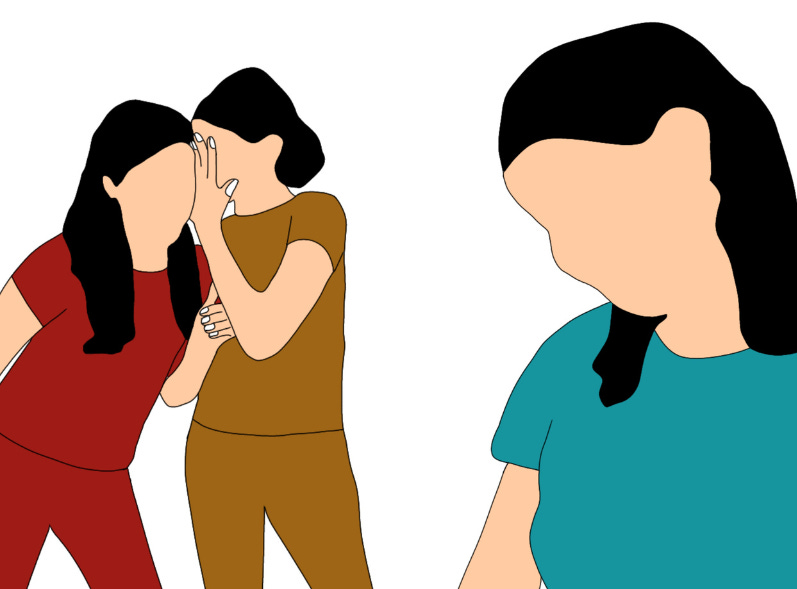
Another commenter shared how she did everything right — showed up early, filled her downtime by emptying trash and restocking supplies, and made no errors in her first few draws. Her coworkers talked about her and laughed while she was nearby anyway.
These are anonymous accounts from an internet forum, but anyone who has spent time in phlebotomy — or really, in any healthcare setting — knows these are not rare stories. They are common enough that a post called “Dealing with Mean Girls” gets a decent amount of interaction from people sharing similar experiences and trying to give helpful advice.
When this is going on, your new hire probably isn’t going to tell you about it. Instead they’ll just stop showing up.
I Know What This Feels Like
When I started working at the hospital, there were three older, well-seasoned women who made my work life genuinely miserable. They were friends, they sat together, and they gossiped about everyone — including me. They weren’t just cold. They were cruel. It got bad enough that even though I loved my job, I thought about quitting just so I wouldn’t have to deal with them.
I also thought about going to my manager or HR, but there was nothing substantial I could take to them besides telling them that these women went out of their way to say mean things, acted like I wasn’t doing my job, and refused to teach me. If I made a mistake, it was an opportunity to shame me publicly. One of them was close friends with the manager, and I didn’t believe anyone would listen to me over women who had been there for twenty years. So I kept working and did my best to avoid them. I eventually switched to nights to get away from them entirely, and I was much happier there.
Bullying isn’t theoretical, and it isn’t limited to young or inexperienced workers with something left to learn. Sometimes that’s the profile. But sometimes the person making a new employee’s life miserable has been in the profession for twenty years and simply never decided to be better.
How It Happens — and Why It Spreads
Phlebotomy programs can be completed in a matter of months, which means some people enter the workforce very young, without much experience navigating a professional environment. They haven’t had many opportunities to learn what professional conduct actually looks like — how to separate personal feelings from professional responsibility, how to be a colleague rather than a rival. How to have a professional disagreement rather than an argument or fight. That’s not necessarily a character flaw. It’s a gap. But it creates the right conditions for a clique mentality to take hold.
It only takes one person. Once someone establishes that gossiping is entertainment and excluding the new person is acceptable, others follow — not always because they’re cruel, but because social dynamics are powerful and it’s easier to be in the group than outside of it. By the time you notice, you’re not dealing with one difficult employee. You’re dealing with a culture. A toxic group of employees that are poisoning the workplace.
But age and inexperience don’t explain all of it — not even close. This behavior exists across every age group and credential level. Sometimes it’s immaturity. Sometimes it’s resentment from people who came up in difficult environments and have decided everyone else should too. And sometimes it’s just who a person is.

Bullying on a phlebotomy floor also rarely looks dramatic. There’s usually no screaming, no documented incident — just an eye roll when a new person asks a question, a complaint made just loudly enough to be overheard, withholding help when a draw goes sideways, whispering that stops when someone walks in. None of it shows up easily in documentation. All of it communicates the same thing: You don’t belong here.
The profession’s pace and culture make this worse. High-volume environments stretch experienced staff thin. Onboarding is often inadequate, leaving new hires dependent on whoever happens to be working that day — and that dependency is exploitable. And because phlebotomy supervisors are typically promoted for technical skill rather than people management, interpersonal dynamics that would be obvious to a trained manager can be genuinely invisible to a well-meaning one.
What It Costs You
Before we get to solutions, consider what you’re actually paying when this goes unaddressed.
You lose people — not the ones who can’t do the job, but the ones with enough self-respect to leave.
The new grad who cried through her shifts at that lab was talented enough to get hired right out of school. She’s gone now, and the profession is poorer for it. Beyond the human cost, a new phlebotomist who is demoralized and afraid to ask questions makes more pre-analytical errors. Your department also develops a reputation — HR hears things, nursing staff hears things, other departments talk. Negative Glassdoor reviews shy away good applicants. A floor known for eating its new hires will eventually struggle to recruit anyone worth keeping.
They either quit, or they conform and add to the toxic culture. A rare few endure. They stay and try to change the culture when they have the opportunity. Those people are worth their weight in gold.
The numbers back this up. The Workplace Bullying Institute estimates that 27% of American workers have experienced workplace bullying, with another 21% having witnessed it. In healthcare specifically, research puts that number closer to 28% annually — and those are only the cases people report. Studies consistently show bullying is underreported, particularly when victims fear retaliation or assume nothing will be done. One Pennsylvania Patient Safety Authority analysis noted that events may not even be recognized as reportable “if bullying is viewed as normalized behavior.”
That last phrase is worth sitting with. It used to be normalized. It was accepted as part of the job, part of paying your dues. What has changed is that organizations — the Joint Commission, the AMA, the ANA — have spent the last decade or so formally naming it as unacceptable and tying it directly to patient safety outcomes. The behavior hasn’t disappeared. The tolerance for it is supposed to have. Whether it actually has on your floor is something only you can answer.
This Is Your Problem to Solve
If this is happening on your floor or in your department — whether you created it, inherited it, or didn’t know about it, then it needs to be fixed. The culture that may be happening on one floor is the culture of the whole department. If you’ve seen something that looked like this and moved on without addressing it, you’ve communicated that it’s acceptable. Bystander inaction is endorsement, even when it’s unintentional.
When you address it, expect pushback. She’s just too sensitive. He can’t take a joke. They need to toughen up. Hold the line. The standard you’re enforcing is not whether someone can take a joke — it’s whether your department treats people with professional respect. Those are not the same conversation, and you don’t let them become one.

When you sit down with the employee whose behavior needs to change, be specific. Not you have a bad attitude — that’s too easy to argue with. Instead: I’ve observed that when [name] asks questions, you respond in a way that shuts the conversation down. That changes today, and here’s what I expect instead. Specific. Observable. Non-negotiable.
If the behavior involves a group dynamic, address it as one. That may mean separate conversations, structural changes to who works alongside whom, or both. Make clear that the culture you are building does not have room for what they’ve been doing.
Building a Department That Doesn’t Eat Its Young
Addressing what’s wrong is only half of it. The other half is being intentional about what you build instead.
Assign preceptors/trainers by temperament, not seniority. The most experienced person in the department is not automatically the right person to train someone new. Look for the tech who enjoys teaching, who has patience in their bones, who remembers what it felt like to not know something. That’s your preceptor.
Set explicit behavioral expectations. Patience with new staff is not a personality trait you hope your employees have. It’s a professional expectation you communicate clearly — in orientation, in staff meetings, by name.
Address it before it starts. Don’t wait for a problem to surface before setting the expectation. Professionalism with coworkers — what it looks like, what it doesn’t — should be part of your regular staff training throughout the year. Not as a response to an incident, but as a standing rule. When your team hears it consistently, it stops being a warning and becomes the culture.

Create a simple check-in structure. At 30, 60, and 90 days, ask your new hires directly: How are things going? Are there relationships on this team that feel difficult? Do you feel like you can ask for help? You won’t always get honest answers. But asking signals that you’re a supervisor who wants to know, and that signal matters more than you might think. Anonymous surveys can also be very eye-opening (and sometimes brutal), but they let us see real feedback without fear of retaliation.
Recognize the people who do it right. You have staff who are warm, patient, and genuinely good to new people. Tell them — publicly — that you notice and that it matters. Culture is shaped by what gets rewarded, not just by what gets corrected.
The Standard You Set
A phlebotomy department has two jobs. The first is the clinical work — accurate, safe, patient-centered collection. The second, which gets far less attention, is the ongoing work of being a team — maintaining an environment where people can do that clinical work without being torn down by the people standing next to them.
You set the standard for both. Not by what you say you expect. By what you allow.
The new grad who cried through her shifts and eventually quit — her trainer had a supervisor. Her supervisor had the ability to intervene. Whether that supervisor knew what was happening, we don’t know. Whether they did anything about it… the outcome tells us no.
Your new hire is watching to see what kind place they’ve landed in. Make sure they see something worth staying for.
Our new Shift Notes series will be published about every two months. Have a topic you’d like to see covered? Let us know in the comments, or reach out to us!
Unfortunately, this happens everywhere. I have remained in the same job for nearly 24 years because I knew I would likely experience and witness the same behavior elsewhere.
Many warning signs can be identified during the hiring process, and organizations should be more intentional about recognizing and avoiding candidates who display bullying behaviors. It does not make sense that healthcare professionals have to endure unprofessional treatment from their coworkers. Too often, people forget that they were once new and needed guidance and support as well.
There were many days when I made it to my car and cried because the stress was overwhelming. My hope is that more managers and supervisors receive training on how to recognize and address workplace bullying before it escalates. Otherwise, phlebotomists will continue moving from one workplace to another in search of a healthy environment where they can focus on providing excellent patient care and performing their jobs well.
Excellent topic!!
Insecurity and professional jealousy can come into play and take heart newbies as one can get bullied at any age and stage of their medical career I am very sad to say. I have trumpeted my half century of experience in this work but did I get hazed into the corporation? WHY YES. My new co-workers yelled "you're killing that kid" while delicately drawing from a hand on a toddler... in front of the parents. They also set me up with a retired military gentleman that only our male employee could call by 1st name, everyone else was to address him as mister____. Did they clue me? And told me to go draw him? This is our culture. When my darling 'chicks' and I'm their hen come and tell me how awful a sitch is I empathize saying "you just have to make this work for you." It is how I have stayed but knowing how deeply underpaid (all the way up through clinical scientists) and under appreciated we are could be a burden. We get to ask, "Why am I really here?" The answer could and should be, "because I am dedicated to the service of Clinical lab, this aspect critical to the function of the lab getting this patient quality results at my hand."